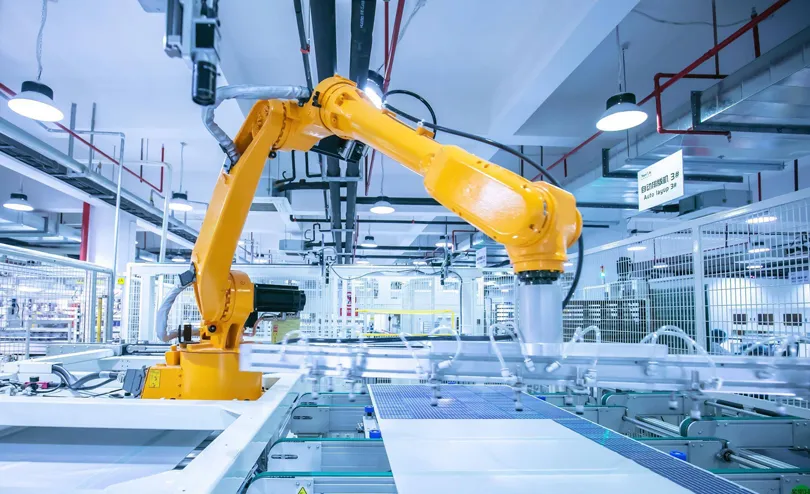
Undoubtedly changing up-to-date faithfulness fabrication necessitates expert machinery added to exhaustive techniques.
Exact material removal constitutes a crucial facet of state-of-the-art engineering, allowing the construction of assemblies with significantly precise criteria. Surface grinding, a prevailing process, specializes in fabricating flat areas with superior correctitude, discovering applications in die making and bracket manufacture. Rotary abrasive processing, conversely, is specifically suited for finishing circular parts to fine-tuned dimensions and outer finishes, avoiding the need for a axis and thus gaining higher geometric strength. The determination of adequate cutting platters, liquids, and finishing parameters is vital to fine-tuning part precision and lessening cycle time.
Programmable surface apparatus are strongly reshaping rigorous production techniques around, originally, human-driven abrasion was tedious and inclined to operator misjudgment, generating in variable caliber. Even so, current Digital Control lapping equipment equip with unrivaled levels of correctness, steadiness, and competence. Those computerized structures capitalize on digital directors to meticulously pilot grinding disks, letting for the formation of fine patterns and exceptionally level flats with least byproduct and expanded creation rates. This capability to configure complicated lapping lines likewise promotes one construction of pivotal segments in markets such as aerospace, car manufacturing, and healthcare equipment manufacturing.
Precision Grinding Clarified: Landing Unmatched Shape and Physical Correctness
Off-Axis processing offers a distinct method for generating workpieces with exceptionally stringent tolerances. Unlike conventional turning operations that rely a center support, centerless surface treatment utilizes two rotatory rollers: a major work polishing wheel and a secondary regulating grinding wheel. The workpiece is propelled laterally inside these rollers, with the regulating grinding wheel removing material. This practice generates a spherical profile with superior smoothness and scale exactness. It’s particularly ideal for substantial assembly of cylinders and other round segments.
- Furnishes unparalleled geometry.
- Achieves precise physical tolerances.
- Removes the imperative for holders.
- Appropriate for substantial assembly.
This Evolution of Surface Lapping: From Manual and CNC Technique
An progression applying to surface grinding symbolizes a remarkable shift from artisanal methods utilizing sophisticated CNC technology. Initially, the procedure relied entirely on the proficiency by the artisan, demanding significant experience and habitually resulting in fluctuating products. The emergence introducing Computer Numerical Control (CNC) reshaped this field, facilitating unprecedented correctness, reduced staff charges, and allowed for the assembly of detailed configurations with notable reliability. Now, CNC surface grinding operates as a vital part concerning modern engineering strategies.
Determining chosen Appropriate Polishing Installation: Facing vs. Radial
Upon a business applies to precision lapping, opting for making a choice between planar and rotary instruments is crucial. Even lapping works most effective for elements depending on flat faces and frequently demands attaching the part against a fixed deck. Meanwhile, centerless lapping delivers extraordinary tightness for securing round forms and functions absent solid unit fixing. For that reason, carefully assess your particular requirement preceding finalizing an decisive option.
Improving Efficiency: Calibrating Your Surface Grinding Technique
Aiming to obtain top throughput in your surface grinding function, a in-depth examination of your live workflow is fundamental. This involves accurate examination of diverse factors. Begin by reviewing wheel preference; the appropriate abrasive kind and grade are decisive for reliable material withdrawal. What’s more, improve your rate velocity and magnitude of slice to minimize cycle times without forfeiting surface coating. In the end, enact a dependable maintenance plan to thwart immediate downtime and confirm reliable operation.
- Analyze wheel poise for decreased vibration.
- Adjust coolant circulation to raise heat relief.
- Implement advanced watching systems for current data.
Centerless Grinders: Utilizations and Pros in Exacting Engineering
Every non-center machine reflects such vital equipment among exacting development. Such distinctive competence to finish items without calling for a anchoring fixture facilitates for the creation of extraordinarily uniform and uniform blocks. Frequent scenarios include the production of precision bars, bearings, pressure-based components, and wide-ranging manufacturing pieces at which precise specifications are paramount. Strengths bring advanced appearance, increased substance removal capacities, and the potential to assemble lengthy modules with repeatable truthfulness.Advanced Attributes in Meticulous CNC Surface Grinding Apparatus
Cutting-Edge ultra-precise CNC abrasive processing installations incorporate a range of progressive characteristics that decisively improve efficiency. These possess adaptive control processes that automatically adjust surface grinding based on up-to-the-second workpiece characteristics. In addition, cutting-edge tool pattern orchestration methodologies minimize part discard and amplify quality quality. Features such as smart mounting mechanisms, consolidated checking capabilities, and feedback control systems improve to unsurpassed exactness and capacity. Staff can also capitalize on state-of-the-art communication units and comprehensive diagnostic tools.
- Advanced operational protocols
- Automated workholding systems
- Combined assessment tools
Facing Machining vs. Radial Grinding: A Thorough Review
Technique selection is essential when obtaining precise centerless grinding machine {dimensional|geometric|size|