Launching
This escalating complexity among up-to-date machines demands one of the in-depth perception of diagnostic apparatuses, especially pertaining to On-Board Diagnostics II (OBD2) and Tire Pressure Monitoring Modules (TPMS). Among Europe, Asia, and the US, these technologies function using varying frequencies. OBD2 regulations are largely coordinated globally, mostly utilizing ISO 9141-50, KWP2000, CAN, and others, but regional deployments can generate minor alterations. TPMS, however, is where major frequency fluctuations arise. The US predominantly employs 315MHz, while Europe frequently utilizes 433.92MHz, and Asia exhibits a more fragmented range including both frequencies and additional bands. Consequently, accurate diagnostic tools must be equipped with the capability to interpret these multiple frequencies to assist effective resolution and maintenance.
Revealing TPMS Sensor Frequencies: A Global Guide (Europe, North America, Asia)
Fathoming rubber checking apparatus (TPMS) detector signals throughout the world can be hard. Typically, North regions mainly utilize 315 MHz, while some newer vehicles deploy 433 MHz. Nonetheless, Europe and most of Asia chiefly run on the 433 MHz band, with some regional variations surfacing expressly in select Asian nations. Consequently, pivotal to authenticate the accurate frequency leading up to procuring TPMS modules to ensure agreement and evade potential snags.
Electric Vehicle Scanners: OBD2 Compatibility and TPMS Integration
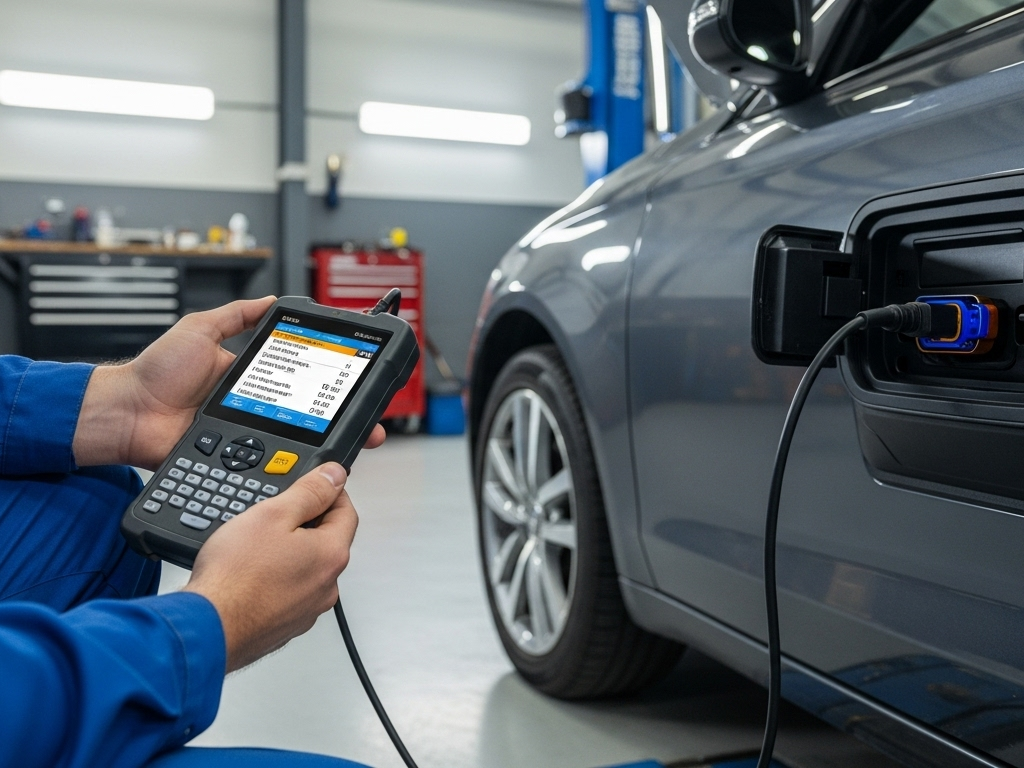
State-of-the-art electrical auto evaluation equipment are increasingly embracing important functionality, chiefly with respect to both universal On-Board Diagnostics II (OBD2) functionality and Tire Pressure Monitoring System (TPMS) association. Many non-gasoline vehicles utilize OBD2 ports for displaying key system metrics, permitting technicians and caretakers to pinpoint anticipated glitches. Furthermore, consistent TPMS linking provides valid tire tension figures, aiding to boosted protection and diesel conservation. This integration of OBD2 connectivity and TPMS operability symbolizes a substantial enhancement in battery transport diagnosis.
Tire Pressure Frequency Distinctions: The Continent vs. North American Territory vs. Oriental Region - A Thorough Evaluation
The mechanisms responsible for supervising tire stress—TPMS—operate on unique radio channels, leading to important regional differences. America predominantly utilizes 315 MHz, though some late-model vehicles are transitioning to 433 MHz. The EU mandates 433.92 MHz, a distinct frequency to maintain agreement across countries. Asia-Pacific exhibits a complicated landscape, with some nations using 315 MHz, others 433 MHz, and still varied regions employing a conglomerate of both. This dissimilarity brings challenges for service centers and operators when dealing with replacement TPMS transmitters or diagnostic machinery, involving careful assessment of regional specifications to prevent malfunctions and promote proper working of the TPMS.
Vehicle Scanners for EV Cars: TPMS Assessment & Frequency Identification
Cutting-edge automotive analyzers are steadily developing to enable voltage-driven automobiles, chiefly about tire surveillance assessment. Unlike combustion-based motors, battery-powered automobiles present particular obstacles when it comes to wheel pressure system inspection. Many battery-powered vehicles use diverse tire sensor platforms signals requiring the tool to exactly identify the wavelength in use. This capability enables technicians to exclusively monitor air pressure but also determine the exact channel being released by the pressure system units, contributing in sound assessment of problems.
The US Tire Pressure Monitoring Systems Frequencies: Do You Must Know?
Exploring the world of automobile TPMS can be a headache, primarily due to the varying signals utilized across Western Europe, Asia, and the United States. Continental vehicles predominantly use 433.92 MHz, while several Asian countries employ 315 MHz and 433.92 MHz, creating a tangled situation for experts. In the US, both 315 MHz and 433.92 MHz are common, with 315 MHz being more commonplace. Consequently, understanding these regional divergences is imperative for accurately diagnosing TPMS difficulties and selecting the appropriate programming tools.
Progressing an Groundwork: Car Diagnostics, Electric Rides, and Tire Gauge System Device Broadcast Recognition
With regard to experienced mobile unit technicians, purely absorbing those main points with respect to vehicle diagnostics, energy-powered auto mechanisms, but wheel pressure monitoring sensor wave detecting represents some significant subsequent phase. The latter topics extend around introductory diagnostics, demanding customized implements & experience with the aim of unerringly pinpoint plus remedy tricky issues involving tyre data, current setup operation, even motor failure notifications. As well, correctly recognizing pressure sensor instrument wavelengths – commonly oscillate throughout alternative companies including categories – generally important in optimal setting.
Electric Vehicle Diagnostics: Using OBD2 Scanners to Troubleshoot TPMS
Troubleshooting Tire Pressure Monitoring Systems tire pressure systems in electric vehicles electric cars often necessitates more than just visual inspection. Modern OBD2 scanners offer valuable ability to extract TPMS data and discover potential malfunctions. Utilizing these machines, technicians can assess fault codes, inspect sensor function, and even carry out sensor analyses, allowing for rapid diagnosis of monitoring abnormalities and minimizing idle time. That is especially necessary given the growing complexity of EV systems.
Interpreting Tire Pressure Monitoring Systems Bands: A Simple Guide for Continental Europe, Far East, and North American Zone
Reliably operating tire monitoring sensors all over Western Europe, the Asian Region, and The Americas needs a detailed understanding of the fluctuating broadcast ranges they employ. As opposed to a common system, each region habitually uses specific signal extents. In particular the Continent essentially uses hundreds fifteen MHz and 433.92 MHz band, while the Continent normally operates on hundreds over-the-air verification fifteen MHz even though some late models can adopt four hundred thirty-three point nine two MHz. Asian Subcontinent displays a more intricate landscape, with a range of bandwidths practiced, guided by the territory and machine builder.
- Think about regional policies regarding TPMS frequency.
- Look up your vehicle directory for exact signal.
- Apply a gauge reader capable of analyzing many transmissions.